
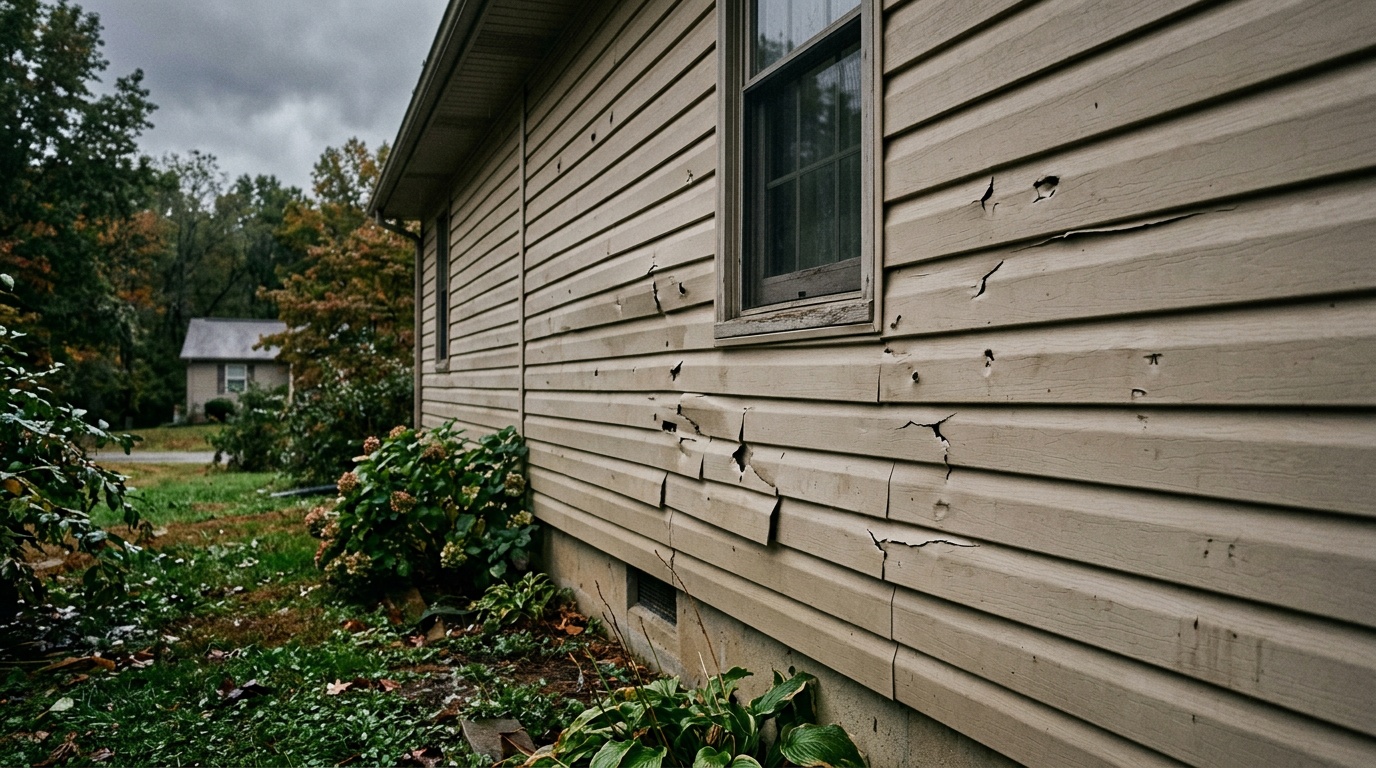
When a severe storm rolls through Kentucky, most homeowners immediately look up — checking the roof for missing shingles or dented gutters. But storm damaged siding repair in Kentucky is just as critical a concern, and it's one that gets overlooked far too often. Your siding is the primary barrier between your home's interior structure and the elements. When it's compromised by hail, wind-driven debris, or falling branches, water infiltration, mold growth, and even structural decay can follow — sometimes without any obvious warning signs for weeks or months.
How Kentucky Storms Damage Your Siding
Kentucky sits in a region that sees a punishing mix of weather: spring hailstorms, summer thunderstorms with damaging straight-line winds, and the occasional tornado. Each type of storm can damage siding in different ways, and understanding the mechanism matters when you're assessing your home afterward.
- Hail impact: Hailstones — even small ones — can crack vinyl siding, dent aluminum, and leave small but significant divots in fiber cement panels. These impact points may look cosmetic at first, but they break the surface seal and allow moisture to penetrate.
- High winds: Wind speeds in a Kentucky thunderstorm routinely exceed 60 mph. At that force, siding panels can be partially lifted, fully torn away, or have their locking seams separated. Even panels that appear intact may have lost their fastening integrity.
- Wind-driven debris: Branches, gravel, and other airborne debris act like projectiles during a severe storm. The resulting punctures and gouges are often irregular in shape and easy to miss during a quick walkthrough.
- Water intrusion at seams: Heavy rain driven sideways by wind can force its way behind panels through gaps that were previously watertight. You may not see external damage at all, but water is already working on your sheathing and insulation underneath.
The takeaway: storm damage to siding isn't always dramatic and visible. A thorough inspection after any significant weather event is essential, not optional.
Signs of Storm Damaged Siding Every Kentucky Homeowner Should Check
After a storm passes and it's safe to go outside, walk the perimeter of your home methodically. Here's what to look for when assessing potential siding damage after a storm in Kentucky:
- Cracks or splits in vinyl panels: Even hairline cracks are a problem. Vinyl becomes more brittle in cold weather, and cracks that seem minor in September can expand dramatically by January.
- Dents or dings in aluminum siding: These are a reliable indicator of hail impact. If you see dents on your siding, check your gutters and downspouts too — the same hail that hit your siding almost certainly hit your roof.
- Missing panels or sections: Obvious, but worth stating — any section of siding that has been torn away exposes your home's exterior sheathing directly to the weather.
- Warping or buckling: Panels that are visibly warped or pulling away from the wall suggest that wind got behind them. This can also indicate that moisture has already begun to build up underneath.
- Loose or rattling panels: Run your hand along the bottom edge of panels. If they move more than a centimeter, the locking seam has been compromised and the panel needs to be re-secured or replaced.
- Interior signs of water intrusion: Staining on interior walls near the exterior, peeling paint, or a musty smell near exterior walls can all indicate that storm damage to your siding has allowed water inside — even if the siding looks okay from the outside.
- Chalking or fading concentrated in one area: On fiber cement or wood siding, this can indicate where water has been repeatedly entering and drying, stripping the finish over time.
If you spot two or more of these signs in the same area of your home, you should treat it as a confirmed damage situation and get a professional assessment before the next rain event.
Should You File an Insurance Claim for Siding Damage in Kentucky?
This is one of the most common questions homeowners ask after a storm, and the honest answer is: it depends on the cause and the extent of the damage. Kentucky homeowner's insurance policies typically cover siding damage that results from a sudden and accidental event — like a hailstorm, a windstorm, or a falling tree branch. Gradual deterioration, rot, or damage caused by neglected maintenance is generally not covered.
Here's what matters most when pursuing a hail damage siding claim in Kentucky:
- Document everything before touching it: Take clear, well-lit photographs of every damaged section from multiple angles. Include a wide shot showing the location on the house and a close-up of the specific damage.
- Note the date of the storm: Insurance companies will cross-reference your claim date with local weather event data. Keep records of any storm alerts or news coverage from that day.
- Get a professional inspection before the adjuster arrives: An experienced roofing and siding contractor can identify damage patterns that an adjuster might miss — or misclassify as pre-existing. Having your own documentation is invaluable.
- Understand matching provisions: In many states, if a portion of your siding is damaged beyond repair, the insurance company may be required to replace the entire side of the home to ensure a consistent appearance. Kentucky's requirements on this can vary by policy, so ask your contractor and insurer about this specifically.
- Don't delay: Most policies require you to file a claim within a reasonable time after the storm. Waiting too long can give the insurer grounds to deny coverage on the basis that you failed to mitigate further damage.
Choosing the Right Siding Material for Kentucky's Climate
If your siding damage is extensive enough to warrant a full replacement — whether through insurance or out of pocket — it's worth thinking carefully about which material makes the most sense for where you live. Kentucky's climate includes hot, humid summers, cold winters with occasional ice storms, and those damaging spring and summer storms. Not every siding product performs equally well in those conditions.
- Vinyl siding: The most common choice in Kentucky for good reason — it's low maintenance, cost-effective, and reasonably durable. Look for thicker gauges (around .044 inches or higher) that resist impact better than builder-grade options. It can crack in extreme cold, so quality matters.
- Fiber cement siding: Products like James Hardie board are exceptionally durable and highly resistant to moisture, rot, and impact. They perform very well in Kentucky's climate and hold paint finish for longer. The upfront cost is higher than vinyl, but the lifespan and insurance benefits often make up for it.
- Engineered wood siding: A middle ground between real wood aesthetics and improved moisture resistance. Performs well in Kentucky's climate when properly installed and maintained.
- Aluminum siding: Less common in new installations but still found on many older Kentucky homes. It dents easily in hail — which can actually be helpful for insurance documentation — but is otherwise durable and rot-resistant.
A contractor familiar with Kentucky's specific weather patterns can walk you through the pros and cons of each option relative to your home's location, age, and existing structure.
Don't Wait on Siding Damage — Act Before the Next Storm
Compromised siding doesn't get better on its own. Every rain event after a storm compounds the damage, driving moisture deeper into the wall assembly and increasing the risk of mold, rot, and insulation degradation. In Kentucky, where late summer and fall can bring additional severe weather, acting quickly after a storm isn't just smart — it's essential for protecting the long-term value of your home.
Pro4mance Roofing & Home Improvements has extensive experience inspecting and repairing storm damaged siding across Kentucky, and we work directly with insurance companies to help homeowners navigate the claims process. If your home was recently hit by a storm, don't wait for the damage to become obvious — Schedule a Free Inspection today and let our team give you a clear picture of exactly what you're dealing with.