
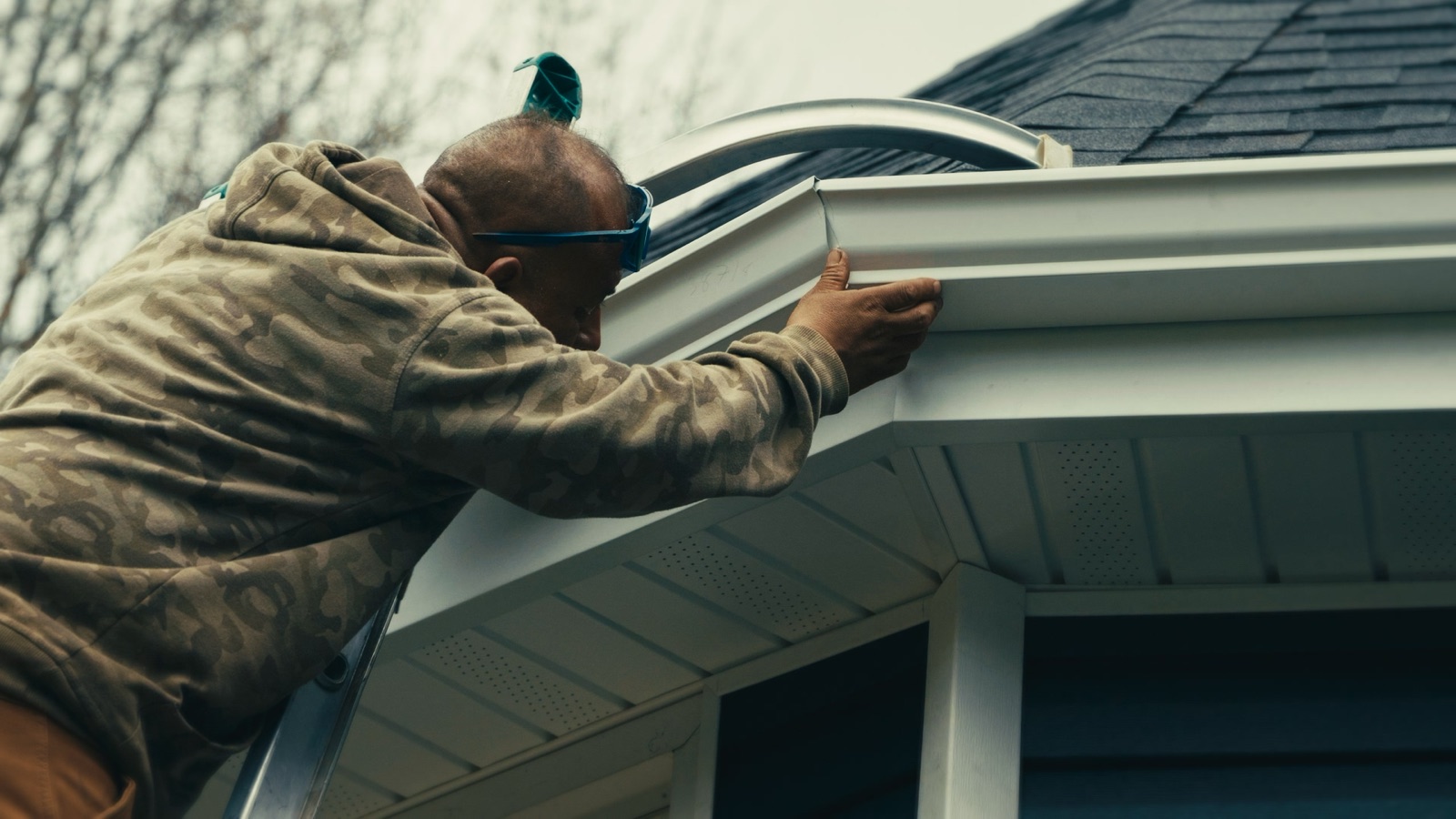
Gutter maintenance in Kentucky is one of the most overlooked — and most consequential — tasks a homeowner can tackle. Kentucky's climate throws a lot at your gutters: heavy spring rains, summer thunderstorms, fall leaf drop from dense hardwood trees, and winter ice. When gutters clog or fail, water has nowhere to go except where you don't want it — into your fascia boards, your foundation, your basement, and even your roof deck. The good news is that with the right knowledge and a consistent routine, most serious gutter problems are entirely preventable.
Why Gutter Maintenance Matters More in Kentucky Than You Might Think
Kentucky averages around 47 inches of rainfall per year — well above the national average of roughly 38 inches. Add to that the state's abundant tree cover, particularly the oaks, maples, and sycamores common across central and eastern Kentucky, and you have a recipe for gutters that clog fast and clog often. A single mature oak tree can shed hundreds of thousands of leaves in a season, and many of them will end up on your roof and in your gutters.
When gutters back up, water overflows and pools against your home's foundation. Over time, this causes soil erosion, basement seepage, and in serious cases, structural damage that costs tens of thousands of dollars to remediate. Clogged gutters also hold moisture against your fascia and soffit — the wooden trim running along your roofline — which accelerates rot and invites wood-boring insects. In winter, backed-up gutters are the leading cause of ice dams, where freezing water backs up under your shingles and causes interior leaks.
The bottom line: healthy gutters are not optional in Kentucky. They are a frontline defense for your entire home.
How Often Should Kentucky Homeowners Clean Their Gutters?
Most roofing professionals recommend cleaning gutters at least twice a year — once in late spring after tree seeds and early growth have settled, and once in late fall after the leaves have dropped. In Kentucky, however, the heavy foliage and frequent storms often warrant a third cleaning, particularly if you have large deciduous trees within 30 feet of your roofline.
Here is a practical schedule to follow:
- Late April / Early May: Clear out spring debris — pollen clumps, tree seeds (especially maple samaras, which compact into a papery mat), and any buildup from winter storms.
- Late October / Early November: Perform the most thorough cleaning of the year after peak leaf fall. This is the single most important cleaning for preventing ice dams and winter water damage.
- After major storms: High winds can deposit large volumes of debris very quickly. A quick visual check after any significant storm — and a hands-on inspection if you see overflowing water during rain — can catch problems before they worsen.
If you have gutter guards installed, don't assume they eliminate maintenance entirely. Many styles still allow fine debris like shingle granules and pine needles to accumulate over time and should be inspected annually.
Common Gutter Problems Kentucky Homeowners Should Watch For
Beyond clogs, there are several gutter issues specific to Kentucky's climate and housing stock that homeowners should understand:
- Sagging or pulling away from the fascia: Gutters are heavy when full of water and debris. Over time — especially after ice formation — the hangers that anchor gutters to the fascia can loosen or pull out. A sagging gutter won't drain properly even when it's clean. If you notice sections pulling away from the roofline, that's a repair that needs prompt attention.
- Leaking joints and end caps: Sectional gutters (as opposed to seamless gutters) have seams where sections connect. These joints are sealed with caulk that degrades over several years. When the sealant fails, water drips directly against your foundation at a concentrated point. Re-sealing joints is a straightforward repair, but it's easy to miss if you only look at gutters when it's not raining.
- Improper pitch: Gutters need to slope slightly — roughly a quarter inch of drop for every 10 feet — toward the downspout. If a gutter was installed incorrectly, or if hangers have shifted over time, water will pond in the middle of the gutter run instead of draining. Standing water is a breeding ground for mosquitoes and accelerates rust in steel gutters.
- Downspout discharge too close to the foundation: The downspout is only half the drainage system. Where the water exits matters just as much. Downspout extensions should carry water at least four to six feet from your foundation, and ideally discharge onto a sloped surface that carries it further away. Many Kentucky homes, particularly older ones, have downspouts that terminate right at the foundation wall — a setup that almost guarantees moisture intrusion over time.
- Rust and corrosion: Galvanized steel gutters — still common on homes built before the 1990s — are susceptible to rust, particularly at seams and around fastener holes. Rust spots that are caught early can sometimes be patched, but widespread corrosion is a sign that the gutter system has reached the end of its service life.
Seamless Gutters vs. Sectional Gutters: What's Worth It for Kentucky Homes?
If you are facing gutter repair or replacement, the choice between seamless and sectional gutters is worth understanding. Sectional gutters are sold in pre-cut lengths at home improvement stores and joined on-site — they are less expensive upfront but have more seams where leaks can develop. Seamless gutters are fabricated on-site from a continuous roll of aluminum, meaning there are no joints along the length of the gutter run (only at corners and downspout connections). This dramatically reduces leak points and generally means less maintenance over time.
For Kentucky homeowners dealing with heavy rainfall and the debris load that comes with the state's tree cover, seamless aluminum gutters represent a sound long-term investment. They are typically installed by contractors with specialized equipment and are priced competitively when you factor in the reduced maintenance and longer service life.
If your gutters are more than 20 years old, showing widespread rust, pulling away from the fascia in multiple spots, or were originally installed as a budget sectional system, a full replacement with seamless gutters is often more cost-effective than repeated patchwork repairs.
When to Call a Professional Instead of Doing It Yourself
Scooping leaves out of a single-story gutter with a ladder and gloves is a reasonable DIY task for many homeowners. But there are situations where calling a professional roofing and home improvement contractor is the smarter and safer move:
- Your home is two stories or more — ladder work at height carries serious fall risk.
- You notice soft or rotted fascia board behind the gutters, which needs to be replaced before new gutters are installed.
- Gutters are pulling away from the house in multiple locations.
- You see signs of water intrusion in your attic or along interior walls near the roofline.
- You want an accurate assessment of whether your gutters need cleaning, repair, or full replacement.
A professional inspection also gives you the opportunity to identify any related roofing issues — such as damaged drip edge, deteriorating fascia, or shingle granule loss — that affect how well your entire drainage system performs.
Keeping your gutters in good working order is one of the simplest and most cost-effective ways to protect your Kentucky home from water damage year-round. Whether you need a seasonal cleaning, a repair, or a full seamless gutter installation, the team at Pro4mance Roofing & Home Improvements is ready to help. Schedule a Free Inspection today and let us take a close look at your gutters, roofline, and drainage system — before the next storm does it for you.