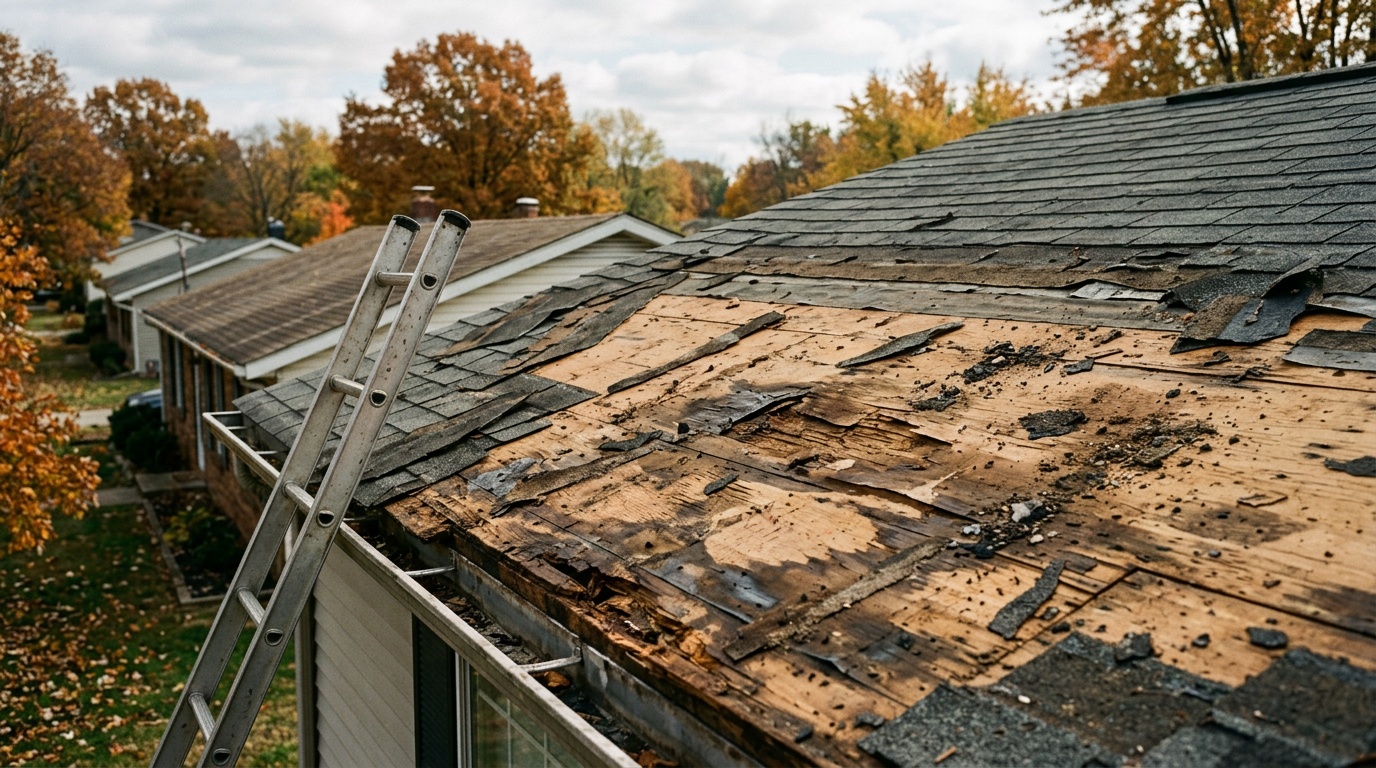
Roof decking damage in Kentucky is more common than most homeowners realize — and it's one of the most important problems to catch before it turns into a full structural failure. The decking, also called sheathing, is the wooden layer between your roof framing and your shingles, and when it rots, warps, or cracks, it undermines everything above and below it. Catching it early can mean the difference between a straightforward repair and a full roof replacement that costs significantly more.
What Is Roof Decking and Why Does It Matter?
Roof decking is the structural foundation that your shingles, underlayment, and flashing are all nailed to — without it, your roofing materials have nothing solid to anchor them. Most Kentucky homes built in the past few decades use oriented strand board (OSB) or plywood as decking material. Both are engineered wood products that perform well when dry, but are vulnerable to moisture over time. When decking fails, shingles can loosen, water can penetrate the attic, and in severe cases, the roof structure itself can become unsafe.
What Causes Roof Deck Damage in Kentucky Homes?
Kentucky's climate is the primary culprit — the combination of humid summers, ice and snow in winter, and frequent storm activity creates conditions that accelerate decking deterioration. Here are the most common causes homeowners in London, Laurel County, and surrounding areas encounter:
- Moisture infiltration: Leaks from damaged or missing shingles, failed flashing, or clogged seamless gutters allow water to sit on or under the decking for extended periods, causing rot and delamination.
- Poor attic ventilation: When warm, humid air from inside the home gets trapped in the attic, it condenses on the underside of the decking and slowly causes it to swell, warp, or grow mold.
- Storm and hail damage: High winds can lift shingles and expose decking to rain. Hail impacts can crack or puncture older, brittle decking. After severe weather, storm damage repair often uncovers decking that was already compromised.
- Age and normal wear: Decking installed 20 or more years ago may simply have reached the end of its serviceable life, particularly if the roof has gone through multiple shingle layers.
- Ice dams: In colder winters across Laurel County and the surrounding region, ice dams form at roof edges and force meltwater back under shingles, saturating the decking directly beneath.
How Can Homeowners Spot Roof Decking Problems?
Some decking problems are visible from inside your attic; others reveal themselves only when a contractor starts tearing off old shingles. That said, there are warning signs worth watching for:
- Sagging or uneven roof surface: If sections of your roof appear to dip or ripple when viewed from the ground, soft or failing decking is a likely cause.
- Spongy feel underfoot: If a contractor or home inspector walks your roof and notices areas that feel soft or give slightly underfoot, that's a strong indicator of wet or rotted decking beneath.
- Attic discoloration and staining: Dark staining, water rings, or mold growth on the underside of your roof deck — visible from inside the attic — point to moisture problems that have been present for some time.
- Daylight visible in the attic: Any light coming through the roof boards, no matter how small the gap, means water is getting through too.
- Shingles that won't hold fasteners: During a re-roofing project, if nails or screws don't hold firmly in the decking, the wood is too degraded to anchor new materials properly.
If you're unsure whether your roof deck is sound, a free roof inspection is the most straightforward way to find out before the situation worsens.
Does Roof Decking Damage Affect a Kentucky Insurance Claim?
It can — and it's worth understanding how, because the answer affects both your coverage and your out-of-pocket costs. In Kentucky, homeowners file and manage their own insurance claims directly with their insurer. A roofing contractor can document damage and provide estimates, but under Kentucky law, a contractor cannot negotiate a claim on your behalf or waive, pay, or rebate your deductible.
When storm or hail damage is the cause of decking deterioration, the repair or replacement of the decking may be covered under your homeowner's policy — but coverage depends on the cause of loss and the specific terms of your policy. Damage caused strictly by age or lack of maintenance is typically not covered. If a storm triggered the failure, document everything carefully, including photos from inside the attic, before any repairs begin. Your insurance claims process will go more smoothly with thorough documentation from a qualified contractor.
Pro4mance Roofing & Home Improvements can inspect your roof, identify damaged decking, and provide the written estimates and documentation your insurer will need — while you handle the claim directly with your insurance company.
What Happens to Roof Decking During a Replacement?
During a standard roof replacement, the old shingles and underlayment are removed, giving the contractor a direct view of the entire deck surface. Any sections that are soft, spongy, delaminated, or visibly rotted are marked and replaced with new OSB or plywood before new materials go on. This is normal, expected work on homes of a certain age — but it does add to the overall project cost, which is why it's worth getting a clear answer up front about the likely condition of your decking before you finalize a roof replacement cost estimate.
Reputable contractors in London and throughout the region will include a per-sheet allowance for decking replacement in their proposals, or at minimum explain how additional decking will be billed if discovered during tear-off. Ask about this specifically before signing any contract.
If you're considering a metal roofing installation, sound decking is especially important — metal panels are typically installed over a layer of underlayment fastened directly to the deck, so any soft spots will show through the finished surface and compromise the installation's longevity.
Frequently Asked Questions
Can I replace just part of my roof decking without replacing the whole roof? Yes — if only isolated sections are damaged and the rest of the deck is structurally sound, a contractor can replace just those boards. This is common when a localized leak or a small area of storm damage has affected one section of the roof.
How much does roof decking replacement add to a roofing project in Kentucky? Decking is typically priced per sheet (a standard 4×8 panel). Industry ranges vary, but homeowners in the London area can generally expect to pay anywhere from $75 to $150 per sheet for materials and labor, though pricing depends on material type, accessibility, and current lumber costs. Get this confirmed in writing before your project begins.
Is rotted roof decking always visible from inside the attic? Not always. Some decking damage starts on the top surface and may not be visible from below until it's well advanced. A qualified contractor walking and probing the roof surface during an inspection is often more reliable than an attic-only visual check.
If you're concerned about the condition of your roof deck — whether after a storm, before a replacement project, or simply because your roof is aging — the team at Pro4mance Roofing & Home Improvements is ready to help. We serve London, Corbin, and homeowners throughout Laurel, Whitley, Knox, and Clay counties. Schedule a Free Inspection today to get a clear, honest assessment of what's going on beneath your shingles.