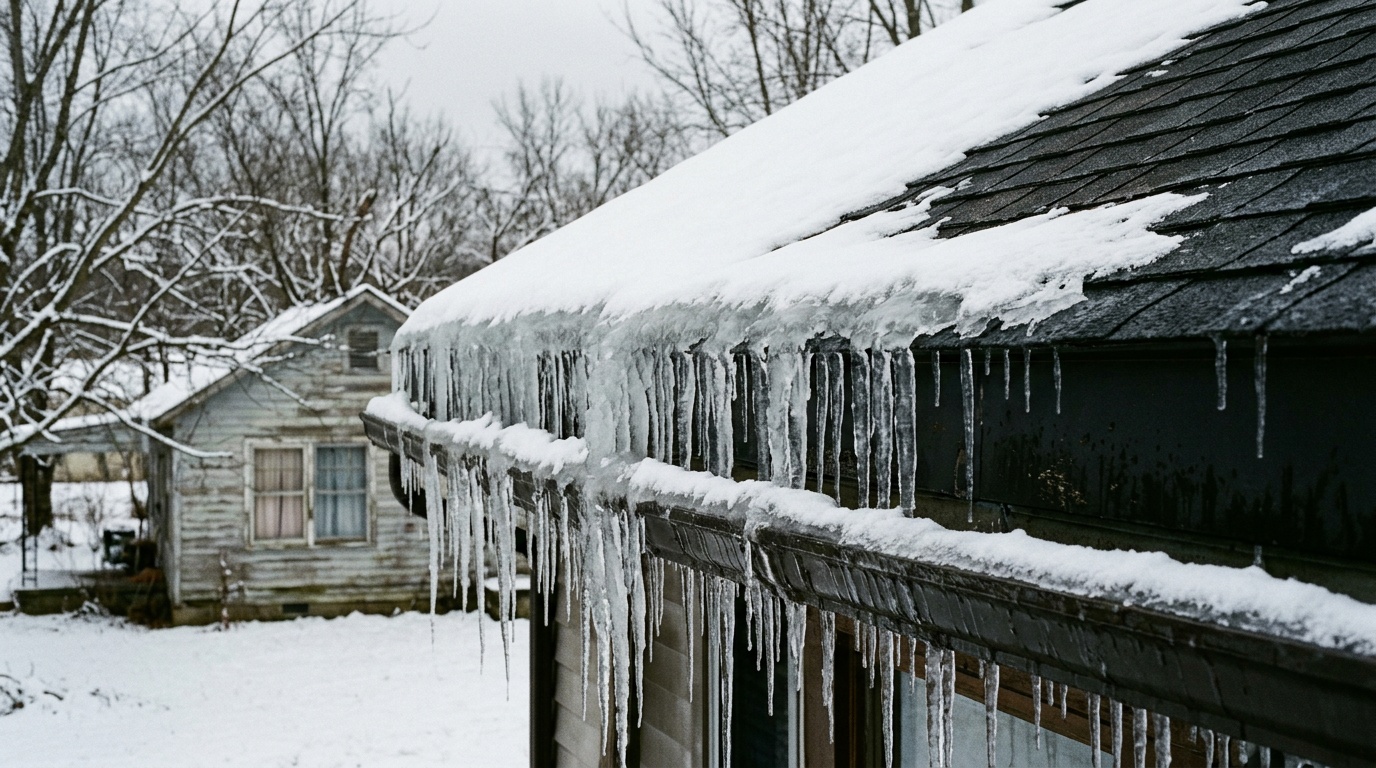
Ice dams on Kentucky roofs form when heat escaping from your attic melts snow near the ridge, and that meltwater refreezes at the colder eaves — creating a thick ridge of ice that traps water against your shingles. Left unchecked, that trapped water seeps under shingles, soaks into decking, and drips into your walls and ceilings, sometimes causing thousands of dollars in hidden damage before a homeowner notices a single stain. The good news is that ice dams are largely preventable with the right combination of insulation, ventilation, and timely professional attention.
What Causes Ice Dams on Kentucky Roofs — and Why They're More Common Than You'd Think
Ice dams form because of uneven roof surface temperatures, which are almost always caused by inadequate attic insulation or ventilation. Many homeowners in London and throughout Laurel County assume Kentucky winters aren't cold enough for ice dams to be a real concern, but that's a costly misconception. It only takes a few inches of snow and a temperature swing from the low 20s to above freezing — a pattern this region sees several times every winter — to set the ice-dam cycle in motion.
- Warm attic air rises and heats the roof deck near the ridge, melting overlying snow.
- Meltwater runs down the slope toward the eaves, which are colder because they extend beyond the heated living space below.
- The water refreezes at the eaves, building up a wall of ice that backs water underneath the shingles on every subsequent thaw.
- Older homes with little attic insulation — common in rural Laurel, Whitley, Knox, and Clay counties — are especially vulnerable.
What Damage Can Ice Dams Actually Do to Your Home?
Ice dams are deceptively destructive because most of the damage happens out of sight, inside your wall cavities and roof assembly. By the time you see a water stain on your ceiling, the water has already traveled through your shingles, through your roof decking, and along rafters or trusses before it found a place to drip.
Common damage linked to ice dams includes:
- Lifted, cracked, or delaminated shingles along the eave line
- Rotted or saturated roof decking that may require full replacement sections
- Soaked attic insulation that loses its R-value and promotes mold growth
- Water-stained or buckled drywall on interior ceilings and upper walls
- Damaged or overloaded seamless gutters pulled away from the fascia by the weight of ice
- Mold and mildew in wall cavities, which can become a health and structural issue if not caught early
A free roof inspection after a significant winter freeze-thaw cycle is the fastest way to know whether ice-dam water has already worked its way into your roof assembly.
How Can You Prevent Ice Dams Before Winter Arrives?
The most effective long-term fix for ice dams is addressing the root cause — heat loss from your living space into the attic. Surface-level remedies like roof raking or heat cables are temporary measures; proper insulation and ventilation are the permanent solution.
- Seal attic air leaks first. Gaps around light fixtures, plumbing chases, and attic hatches allow warm indoor air to flood the attic and heat the roof deck. Caulking and foam-sealing these penetrations is the single highest-impact step you can take.
- Add attic insulation. Most building scientists recommend R-49 to R-60 of insulation in attic floors for Kentucky's climate zone. If your attic floor is under-insulated, you're heating your roof, not your home.
- Ensure balanced attic ventilation. Soffit intake vents paired with ridge vents keep cold outside air flowing through the attic, equalizing the roof surface temperature. Poor ventilation traps attic heat even when insulation levels are adequate. (See our post on roof ventilation for a deeper dive into this topic.)
- Install an ice-and-water shield. If you're scheduling a roof replacement, ask your contractor to install a self-adhering ice-and-water barrier membrane along the eaves — typically the first three to six feet of the roof deck. This waterproof layer protects the decking even if water backs up under the shingles.
- Consider metal roofing. A standing-seam metal roof sheds snow and ice more readily than asphalt shingles, reducing the volume of meltwater available to dam at the eaves. It's not immune to ice dams if attic heat loss isn't addressed, but it dramatically reduces the risk.
What Should You Do If You Already Have an Ice Dam?
If you spot a ridge of ice building at your eaves during a cold snap, the safest immediate step is to call a professional — not to climb up there yourself. Ice-covered roofs are among the most dangerous surfaces a homeowner can attempt to walk on, and improper removal techniques (like using a standard metal ice pick or a garden hoe) can crack shingles and void a manufacturer warranty faster than the ice dam itself.
Here's what professionals and safety-focused homeowners typically recommend:
- Roof raking from the ground. A long-handled roof rake with wheels or bumpers (not a flat blade) can safely pull snow off the lower few feet of your roof from the ground, reducing the fuel available for ice-dam formation. Never attempt this from a ladder on an icy surface.
- Calcium chloride ice melt. Filling a tube sock or nylon stocking with calcium chloride and laying it perpendicular across the ice dam (not parallel) creates a melt channel that lets water drain off. Do not use rock salt — it can accelerate corrosion in gutters and damage shingles.
- Call a roofing professional for steaming or low-pressure hot water. This is the industry-preferred method for ice dam removal. It melts ice quickly without mechanical damage to the roof surface.
- Schedule a follow-up inspection. Once the ice is gone, have a contractor check whether water has already infiltrated the roof assembly. Early roof repair is far less expensive than replacing rotted decking or dealing with mold remediation months later.
Does Homeowners Insurance Cover Ice Dam Damage in Kentucky?
It depends on your policy and the specifics of the damage. Most standard homeowners insurance policies in Kentucky cover sudden and accidental water damage caused by ice dams — such as a ceiling collapse or a burst pipe resulting from ice backup — but they may exclude gradual damage that built up over multiple seasons without being addressed. Documenting the damage promptly and completely is critical. If you suspect ice-dam damage, contact your insurer as soon as possible and arrange for a professional contractor to provide written documentation of the roof's condition before any repairs begin. Pro4mance Roofing & Home Improvements can provide thorough written assessments to support your insurance claim process, though under Kentucky law the homeowner files and manages the claim directly.
Frequently Asked Questions
Are ice dams a real problem in London, Kentucky, or just in colder northern states? Ice dams absolutely occur in London and throughout Laurel County. Kentucky's freeze-thaw cycles — where temperatures drop into the 20s overnight and rise above freezing the next afternoon — are actually ideal conditions for ice dam formation, even with relatively modest snowfall.
How much does it cost to fix ice dam damage in Kentucky? Costs vary widely based on how far water infiltrated. Minor shingle and flashing repairs may run a few hundred dollars, while cases involving decking replacement, insulation removal, and mold remediation can reach several thousand. Addressing insulation and ventilation issues proactively is nearly always cheaper than repairing the downstream damage.
Will adding heat cables to my gutters prevent ice dams? Heat cables in gutters prevent ice from blocking the gutter itself, but they don't address the root cause — attic heat loss — and they don't stop water from backing up under shingles above the gutter line. They can be a helpful supplement in problem areas, but they're not a substitute for proper insulation and ventilation.
If you're concerned about ice dam risk on your home this winter — or you suspect last season's freeze-thaw cycles already did some damage — the best next step is a professional evaluation. Schedule a Free Inspection with Pro4mance Roofing & Home Improvements in London, Kentucky, and we'll give you an honest assessment of your roof's condition and what, if anything, needs to be done before the next cold snap arrives.